



Demolition during a renovation: your complete guide
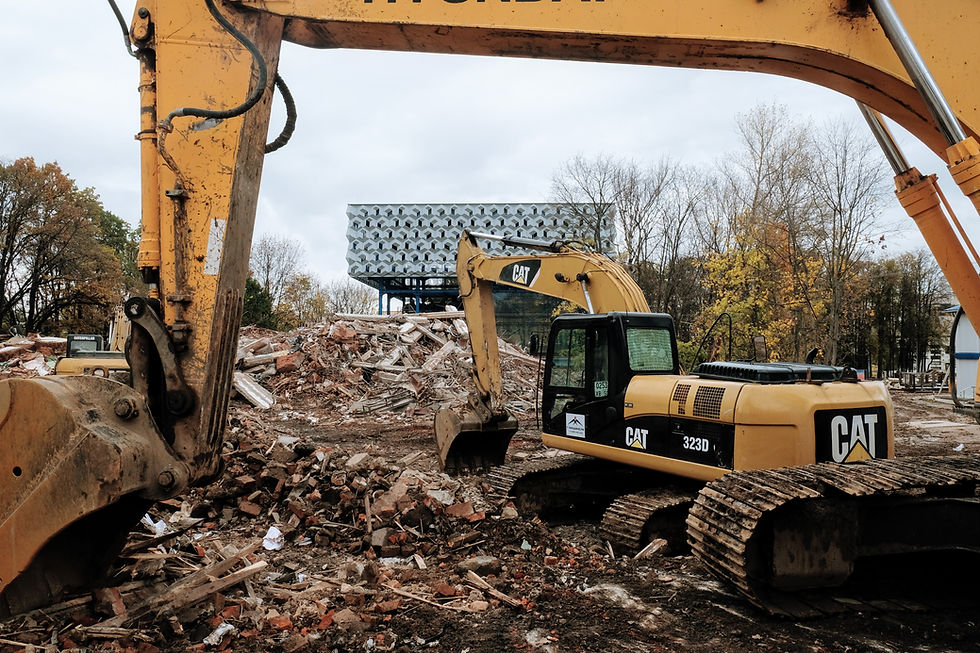
Demolition is often the very first major step in a renovation project, whether it's for a single-family home, a log cabin, or a detached garage. At Plan Maison Québec, we've observed that many homeowners underestimate the importance of this essential phase.
Yet, far more than a simple act of "tearing things down," a well-planned and well-executed demolition often determines the success and safety of the entire renovation project. In this comprehensive guide, discover what demolition truly entails, why it's crucial, the steps involved, the safety considerations, and the mistakes to avoid.
What is demolition in a renovation project?
Why is demolition essential?
Demolition vs. stripping: understanding the difference
The main stages of a successful demolition
Safety: a major issue in any demolition project
Risks and mistakes to avoid during a demolition
How to plan a successful demolition
What is demolition in a renovation project?
When we talk about demolition in the context of a renovation, it's not simply a matter of knocking down walls or removing old tiles. Demolition involves removing all or part of the existing elements to prepare the space for the new layout. This can range from tearing up interior finishes to demolishing heavy structures such as load-bearing walls or outdated floors. Contrary to a simplistic view, demolition is a technical step that must be carefully planned to avoid delays, additional costs, or serious structural problems later in the project.
At Plan Maison Québec, we often advise our clients to consider demolition as an essential preparatory step before even thinking about finishing work such as flooring, plumbing, or electrical wiring. Without this preparation, subsequent work risks being ineffective, costly, or even dangerous.

Why is demolition essential?
Even before discussing aesthetics or design, demolition ensures that the existing structure is ready for a successful transformation. First, it allows for the identification of problems invisible to the naked eye, such as contaminated materials (asbestos, lead), hidden mold, or weakened structural elements. These problems can have a direct impact on the health of occupants and the safety of workers.
Second, demolition is the time to assess which elements to keep, modify, or remove. This includes understanding which walls are load-bearing, which installations can be retained, and how to optimally reorganize the space. A well-executed demolition also optimizes the construction schedule, facilitates access for tradespeople to critical areas, and ensures that new installations integrate properly into the cleared space.
Finally, demolition prepares the foundation from which all other construction or renovation phases can be safely undertaken. Without a structured and rigorous demolition, the continuation of the work risks being delayed, or worse, jeopardized.

Demolition vs. stripping: understanding the difference
In many projects, "demolition" and "stripping" are often confused. However, these two terms refer to distinct but complementary operations. Stripping is the process of removing all non-structural elements, such as finishes, insulation, lightweight partitions, plumbing fixtures, and electrical installations, to create a clean slate before any more extensive work.
Demolition, on the other hand, generally involves more structural elements: load-bearing walls, floors, load-bearing structures, foundations, etc. Stripping is often a preliminary step to demolition itself, as it allows for the removal of lightweight or recyclable materials before tackling the infrastructure itself.
This distinction is important because a renovation project carried out without proper preliminary stripping can generate mixed waste, planning errors, and even increased hazards for workers. At Plan Maison Québec, we always insist that every demolition project begin with a complete assessment and methodical stripping.

The main stages of a successful demolition
Demolition is not something to be improvised. It follows a precise sequence of steps designed to optimize safety, waste management, and site preparation. Here are the main phases you will encounter in a typical project:
Initial diagnosis and assessment
Before any tools are even placed on site, a complete assessment of the existing structure is carried out. This includes analyzing the potential presence of hazardous materials (asbestos, lead), identifying load-bearing walls, and analyzing the overall condition of the installations. This step is crucial for accurately defining the scope of the demolition.
At this stage, experts must be able to identify potentially problematic areas, such as signs of hidden mold or deteriorated structural elements. A thorough assessment helps avoid costly or dangerous surprises when work actually begins.

Obtaining the necessary permits
Depending on the scope of the project and municipal regulations, some demolitions require a specific permit or prior notification. This can be particularly true for renovations involving significant structural modifications or partial or complete demolition. In Quebec, many municipalities require permits before any demolition can take place.
Obtaining these permits in advance helps avoid delays and fines, and ensures that your project complies with local planning requirements.
Disconnection from public services
Before any demolition begins, it is essential to disconnect utilities such as electricity, water, gas, and heating systems. This ensures that workers can operate safely and prevents incidents such as accidental outages or leaks. This step often requires the intervention of certified professionals, particularly for gas and electricity connections.
Cleaning and removal of non-structural installations
Once the diagnostics are completed and the services disconnected, the stripping process begins, which involves removing all non-load-bearing and recyclable components. This may include removing partitions, floor coverings, electrical installations, or sanitary fixtures.
This step makes the site safer and cleaner, while also facilitating the sorting of materials for recycling or disposal.
The actual demolition
It is at this point that the actual demolition of the targeted structures begins, whether it be a wall, a floor, or any other component. This phase often requires specialized tools and heavy equipment to ensure efficient and safe progress.
The demolition method varies depending on the needs: it can range from controlled partial demolition to preserve certain existing structures to total demolition when the entire building must be removed.
Cleaning and waste management
Demolition generates a large amount of debris. Therefore, it is essential to plan for effective waste management, including sorting, recycling, and disposal according to environmental standards. Materials such as wood, metal, and concrete can often be recycled, reducing the environmental impact of the construction site.
Thorough cleaning after demolition also prepares the area for subsequent renovation phases, such as reconstruction, mechanical installation, or the laying of new flooring.

Safety: a major issue in any demolition project
Safety is one of the fundamental pillars of a demolition project, as this stage alone concentrates a large portion of the physical and structural risks of a renovation project. Contrary to popular belief, demolition is an extremely technical operation that must be carried out with rigorous methodology, appropriate equipment, and strict professional supervision. Whether you are renovating an old house, a seasonal cottage, or a garage, the risks may vary, but the safety requirements remain equally high.
One of the first challenges is the management of hazardous materials. Before even removing a single wall, it is essential to ensure that the building does not contain asbestos, lead, or deep-rooted mold. Handling and removing these contaminants requires precise techniques and specialized equipment. A simple mistake can expose both occupants and workers to serious respiratory risks.
Another essential aspect of safety concerns the stability of the remaining structure. Poorly controlled demolition can weaken load-bearing elements, cause partial collapse, or create cracks that will only appear much later. This is why a competent contractor systematically conducts a load analysis, identifies load-bearing walls, and plans the precise order in which elements must be removed. At Plan Maison Québec, we always insist that projects involving load-bearing structures be supervised by professionals trained in this type of work.

Worker safety is also central to the process. Helmets, gloves, safety glasses, reinforced boots, appropriate respirators, and protective clothing are essential equipment on a demolition site. In addition, measures such as establishing restricted zones, installing protective netting, and providing ventilation to control airborne dust are implemented. Demolition generates an impressive quantity of fine particles, which can be harmful if not properly contained.
The risks associated with technical networks should not be overlooked. Improper gas disconnection, a live electrical cable, or a pressurized water pipe can lead to serious accidents. An experienced contractor follows a strict procedure to disconnect, drain, and secure each installation before beginning work.
Finally, safety also encompasses the protection of the neighborhood and the occupants. Protective barriers, dust covers, and dust extraction systems are often used to prevent debris or fine particles from spreading to neighboring properties. In a house occupied during renovations, it is vital to isolate the demolition areas from the rest of the rooms.
In short, demolition is an operation where precision and caution are essential. With Plan Maison Québec, you have the guarantee that each step is carried out according to the strictest standards, in order to preserve the structure, the health, and the safety of everyone.
Risks and mistakes to avoid during a demolition
Demolition is a delicate process, and several mistakes can compromise not only the quality of the project but also the safety of your house or cottage. Poor planning or an overly hasty approach can lead to costly, sometimes irreversible, consequences. Here are the main risks and mistakes that homeowners must absolutely avoid.
The most common mistake is underestimating the importance of a thorough preliminary assessment. Neglecting this step can lead to undetected hazardous materials, unknown load-bearing walls, hidden water leaks, or fragile structural elements. Once demolition begins, these problems become much more difficult and expensive to correct. An assessment reveals what the naked eye cannot see and is essential before removing any elements.
Another common mistake is attempting to carry out a complex demolition yourself, either to save money or out of overconfidence. While some minor, superficial demolition work can be handled by a knowledgeable homeowner, interventions affecting the structure, mechanical systems, or existing finishes should be entrusted to specialists. Improper handling can lead to floor subsidence, burst pipes, or electrical hazards. Savings on labor can therefore turn into major repair expenses.

Another often underestimated risk is the poor management of dust and debris. Demolition generates significant amounts of particles that can spread throughout the house if the affected areas are not properly sealed off. These particles can damage ventilation systems, contaminate adjacent rooms, and pose health risks, especially if old materials are exposed. A lack of containment can also attract moisture or cause leaks in exposed areas.
Many renovation projects are slowed down or jeopardized by the accidental destruction of elements that were meant to be preserved, such as a load-bearing wall concealed by a partition or a water pipe hidden within a wall. Impulsive demolition, without phased cutting and regular checks, can have dramatic consequences for a building's stability.
Homeowners also sometimes neglect the legal requirements associated with demolition. Failure to obtain a permit when required can result in substantial fines and even a complete work stoppage. In addition to this, regulations regarding waste management, material recycling, and neighborhood protection cannot be ignored.
Finally, a common mistake is the absence of a reconstruction plan. Demolition must be planned in relation to the work that will follow; removing too much or too little can disrupt the planning and lead to unforeseen costs. At Plan Maison Québec, every renovation plan incorporates a comprehensive vision that includes demolition, ensuring consistency between all phases.
By avoiding these mistakes and working with experts, your renovation project will proceed smoothly, safely, and cost-effectively.

How to plan a successful demolition
The key to a successful demolition lies in rigorous planning and careful coordination with all project stakeholders. At Plan Maison Québec, we systematically recommend that our clients:
Have a complete structural assessment carried out before making any decisions.
Verify local requirements regarding necessary permits or authorizations.
Collaborate with qualified contractors to ensure safe and compliant execution.
Allow for contingencies in time and budget to manage any unforeseen circumstances.
Thanks to a structured and professional approach, demolition becomes a smooth process that perfectly prepares the site for the upcoming construction or renovation phases.

Conclusion
Demolition is much more than just a "destructive step" in your renovation project; it's the essential starting point. At Plan Maison Québec, we know that every house, cottage, or garage is unique, and that every demolition project requires special attention, careful planning, and safe, professional execution.
By taking the time to properly prepare for this phase, you give yourself the best chance of successfully completing your renovation project, avoiding costly delays, and creating a space that truly meets your needs.
Are you planning a major or minor renovation and need support?

Comment 5Nice read, the article explains renovation topics in a very simple way. I recently explored Vulcan Hats Construction while looking into home remodeling toronto.