



Extension in a flood zone: constraints and solutions
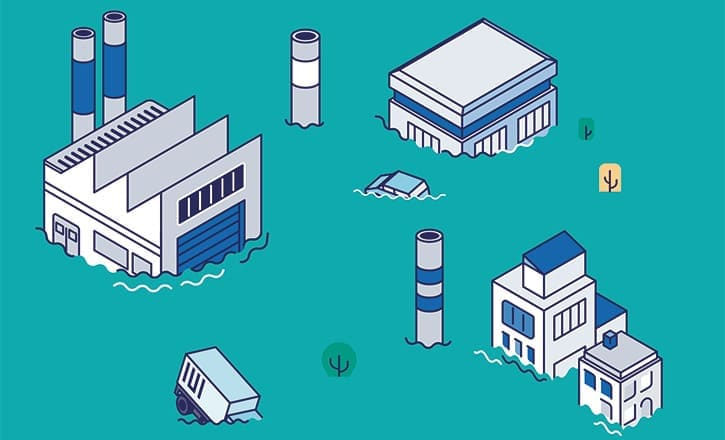
In Quebec, many homeowners want to expand their house, cottage, or garage to meet new needs. However, when the property is located in a flood zone, the project quickly becomes more complex. Between strict regulations, environmental risks, and technical requirements, an expansion in a flood zone demands rigorous planning and specialized expertise.
At Plan Maison Québec, we regularly assist clients facing this reality. Understanding the constraints and identifying possible solutions not only helps avoid costly mistakes but also ensures a sustainable, compliant, and safe project.
Understanding what a flood zone is
A flood zone is an area susceptible to being submerged by water during river floods, overflows, or extreme weather events. In Quebec, these zones are generally classified according to their flood frequency, notably 0-20 year zones, which present a high risk, and 20-100 year zones, where flooding is less frequent but still possible.
This classification is essential as it directly influences construction and expansion possibilities. A property located in a 0-20 year zone will be subject to much stricter restrictions than a property in a 20-100 year zone.
Before even considering an expansion, it is therefore crucial to determine precisely which zone your property is located in. Plan Maison Québec always recommends this initial step to properly guide the project from the outset.

An increasingly strict regulatory framework
Over the years, the Quebec government has strengthened the regulations surrounding flood zones. These changes aim to limit flood damage and protect residents and infrastructure.
Since the implementation of new guidelines and regulations, particularly in 2026, municipalities have been applying stricter standards. In high-risk areas, horizontal additions are often prohibited. This means that adding a room on the ground floor is generally impossible.
In some cases, exceptions exist, but they are very strictly regulated. In moderate-risk areas, additions are sometimes permitted, provided that strict requirements are met, particularly regarding the building's fire resistance.
Plan Maison Québec notes that many projects are rejected simply because they do not comply with these standards from the design stage. This is why professional guidance is essential from the outset.

Technical constraints to be respected
Beyond administrative regulations, numerous technical constraints arise when planning an extension in a flood zone. The primary challenge is protecting the building from water infiltration and structural damage.
One of the most frequent requirements is raising the floor level. The floor level must be above the reference flood level. This sometimes involves raising the entire structure or designing a vertical extension.
The materials used must also be water-resistant. Some traditional materials are not suitable for flood zones and must be replaced with more durable alternatives.
Mechanical systems, such as electrical and heating systems, must also be installed at a safe height to prevent damage in the event of a flood.
At Plan Maison Québec, we integrate these constraints from the initial design phase to ensure the compliance and sustainability of our projects.

The challenges related to insurance and financing
Another often underestimated aspect concerns insurance and financing for the work. Properties located in flood zones can be more difficult to insure, and some companies simply refuse to cover flood-related risks.
This can also affect obtaining a loan to finance the addition. Financial institutions assess the level of risk before granting financing, which can complicate the project.
A poorly planned addition can therefore have significant financial consequences. Plan Maison Québec helps its clients anticipate these challenges by designing compliant and secure projects, which facilitates the process with insurers and lenders.

Solutions for expanding despite constraints
Despite the numerous restrictions, solutions exist for expanding a property in a flood zone. The key is to adapt the project to the constraints rather than trying to circumvent them.
Adding a story upwards is often the most viable solution. Increasing the living space without encroaching on the ground, which is generally more acceptable to regulations.
It is also possible to convert existing spaces, such as an attic or basement, provided that floodproofing standards are met. In some cases, the basement must be repurposed as a flood-resistant utility area.
Another approach is to design detached structures, such as a garage or accessory building, if local regulations permit.
Plan Maison Québec offers customized solutions tailored to each situation, taking into account the specific characteristics of the land and municipal requirements.

The importance of a suitable design
A home addition project in a flood zone cannot be treated like a standard project. Every detail counts, from the building's placement to the selection of materials.
A suitable design not only ensures compliance with regulations but also minimizes long-term risks. For example, integrating efficient drainage systems, backflow preventers, and leak protection can make a significant difference.
At Plan Maison Québec, we pride ourselves on designing smart and sustainable plans. Our expertise allows us to optimize space while respecting environmental and regulatory constraints.
The impacts of climate change
Climate change has a direct impact on flood zones. Episodes of intense rainfall and spring flooding are becoming increasingly frequent, raising the risk to properties located in these areas.
This largely explains the tightening of regulations in Quebec. Authorities are seeking to limit construction in at-risk areas and encourage more resilient practices.
For homeowners, this means that any expansion must be planned with a long-term perspective. It's not just about complying with current standards, but also about anticipating future conditions.
Plan Maison Québec incorporates this reality into its projects by offering sustainable solutions adapted to climate challenges.

Why hire experts?
Given the complexity of the regulations and constraints, it is strongly recommended to consult professionals when designing an addition project in a flood zone.
An expert is familiar with the applicable regulations, technical requirements, and best practices to ensure project compliance. They can also help you avoid mistakes that could lead to rejections or additional costs.
Plan Maison Québec supports its clients at every stage, from site analysis to plan design. Our personalized approach transforms a complex project into a concrete and safe reality.

Conclusion : flood zone extension and the constraints
Extending a house, cottage, or garage in a flood zone presents a significant challenge, but it's not impossible. With a thorough understanding of the constraints, meticulous planning, and a suitable design, it's possible to achieve a compliant and sustainable project.
Strict regulations, technical requirements, and financial considerations must be taken into account from the outset. That's why it's essential to work with qualified professionals.
Plan Maison Québec is your trusted partner for bringing your extension project to life, even in the most complex situations. Our expertise in custom plan design allows you to move forward with confidence and peace of mind.
Together, we will transform your constraints into sustainable and effective solutions.

Comments