


Integrating residential solar panels into your house plan
Updated: Aug 21, 2025

In Quebec, interest in renewable energy continues to grow. Among the most popular solutions, the installation of residential solar panels is attracting increasing interest from homeowners looking to reduce their ecological footprint while saving energy in their Quebec City homes.
For those planning to build a house, cottage, or garage, integrating a solar system from the design phase offers significant advantages, both technically and financially. At Plan Maison Québec, we firmly believe that advance planning is the key to a successful solar project.
The rise of residential solar energy in Quebec
Although Quebec boasts one of the cleanest electricity grids in the world, thanks to hydroelectricity, citizens are increasingly looking to diversify their energy sources. Solar energy is at the heart of this consideration, due to its growing accessibility, proven technology, and ecological benefits. This trend is particularly evident among new-build homeowners, who want to integrate sustainable practices from the design phase of their homes.
In a context where reducing greenhouse gas emissions is becoming a societal priority, many Quebecers see solar panels as a concrete way to contribute to this collective goal. Moreover, the growing number of suppliers, improved panel performance, and falling equipment prices are now facilitating access to this technology.
Planning to add a solar system is no longer reserved for the initiated: it has become a realistic choice for anyone wishing to combine energy independence, environmental responsibility, and the enhancement of their real estate assets. At Plan Maison Québec, this vision guides us in developing plans that are resolutely focused on the future.

Why think about solar panels from the design stage?
One of the key principles of a well-thought-out construction project is anticipation. Integrating a solar panel system from the design phase optimizes the synergy between architecture and future energy needs. This means that the building's structure, spatial configuration, and thermal envelope are designed with overall energy performance in mind, rather than attempting to retrofit the house for a solar installation later.
When developing a plan with Plan Maison Québec, we can orient the building to maximize passive solar radiation and provide clear roof areas to accommodate the panels without unnecessary shading. We also anticipate the routing of electrical conduits, space for inverters or batteries, and structural loads related to the weight of the panels.
These upfront decisions not only optimize the performance of your solar system, but also reduce installation costs and avoid often costly corrective renovations. Effective planning therefore provides more flexibility for the future, even if the solar installation is not carried out immediately.

The ideal conditions for a photovoltaic system
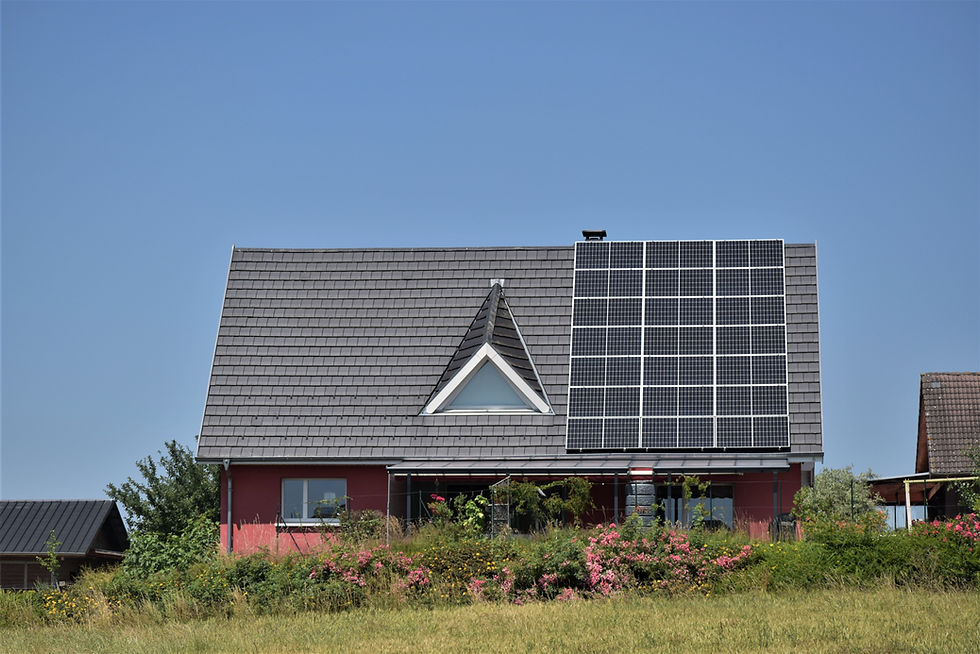
The performance of a residential solar system depends on specific conditions, which must be considered from the design stage. A south-facing roof remains the most favorable, as it captures the maximum amount of solar radiation throughout the day. A roof slope between 30 and 40 degrees is generally optimal for capturing the sun at our latitudes, but performance remains attractive even with variations in slope.
The quality of solar exposure also depends on the immediate environment. Mature trees, neighboring buildings, or even architectural elements such as poorly positioned skylights or chimneys can create shaded areas that are detrimental to performance. Shading, even partial, has a significant impact because photovoltaic cells react in series: if a single cell is shaded, it can affect the entire panel.
That's why at Plan Maison Québec, we take into account the modeling of the environment in which your home will be built. Simulation tools allow you to anticipate shaded areas and maximize solar capture. This rigorous approach allows you to build a home that will meet your current energy needs and your future energy ambitions.
Possible types of solar installations
The technological options available to homeowners are varied, and each system has its own advantages. On-grid systems are most commonly installed in urban and semi-urban areas. They allow you to consume the electricity produced in real time and export the excess to the Hydro-Québec grid. The net metering program entitles you to energy credits, which you can use later in the year when solar production is lower, such as in winter.
Off-grid systems, on the other hand, are primarily intended for isolated homes or cottages located far from the electricity grid. These systems require battery storage, which increases the cost and complexity of the installation, but they offer complete autonomy. This may be a wise choice in certain regions of Quebec where grid connection is too expensive or simply non-existent.
It is also possible to opt for a hybrid system, which combines the best of both worlds. Such a configuration can provide a continuous power source in the event of a grid outage, while also allowing the sale of electricity to Hydro-Québec.
With Plan Maison Québec, we help you identify the solution best suited to your construction site, your consumption habits, and your long-term goals.

Costs of a Residential Solar System
A residential solar project is an investment that should be seriously considered from the outset. According to Hydro-Québec, the average cost of a turnkey system for a single-family home is around $3,000 to $4,000 per kilowatt installed. A typical 6 kW system, sufficient to cover a significant portion of a household's energy consumption, will therefore cost between $18,000 and $24,000 before subsidies.
To this amount may be added the costs of feasibility studies, engineering, permitting, and installation, as well as the cost of inverters and, in some cases, batteries. Fortunately, several financial aid programs are available, including federal grants through the Greener Homes program, that can cover part of the costs. Low-interest loans are also available to facilitate financing.
In the long run, these installations are profitable. Estimates suggest annual savings on your electricity bill can range from $500 to $1,000, depending on your consumption and the size of your system. Considering the potential increase in electricity costs in the coming years, investing in solar energy becomes even more important.

The concrete advantages of self-production of electricity
Producing some of the electricity consumed at home yourself offers a number of tangible benefits. From an economic perspective, it provides protection against energy inflation and a way to reduce dependence on external sources. Homeowners who choose self-generation also increase the resale value of their property, as buyers are increasingly attentive to energy performance and potential savings.
In addition to the economic benefits, the environmental impact is considerable. An average photovoltaic system can avoid the emission of several hundred kilograms of CO₂ per year. This is part of a concrete action for the climate, in addition to supporting Quebec's energy diversification.
Finally, for those who opt for hybrid or stand-alone systems, self-generation provides greater resilience. In the event of a grid outage, you continue to have access to a backup energy source. This security is particularly sought after in rural areas or during winter storms.

Mistakes to avoid in solar integration
Too often, solar systems are installed hastily on homes that weren't designed to accommodate them. This can lead to significant additional costs, a loss of efficiency, and even structural problems if the roof isn't sized to support the load of the panels.
Among the most common mistakes are insufficient usable roof space, suboptimal building orientation, overestimating potential savings, or failing to comply with municipal planning regulations. Another common pitfall is neglecting ventilation of the space beneath the panels, which can negatively impact their performance in the summer.
To avoid these pitfalls, it's crucial to involve architectural design experts from the outset. At Plan Maison Québec, we integrate solar-related constraints and opportunities into every planning phase, ensuring a smooth, efficient, and cost-effective implementation.

Strategic location: a determining factor
Not all areas of Quebec have the same sunlight conditions. For example, the Estrie, Montérégie, Outaouais, and Centre-du-Québec regions are among the most favorable in terms of annual solar radiation. In these areas, photovoltaic systems achieve particularly high performance.
But that's not all: each municipality can impose specific regulations on solar installations. Some require specific permit applications, area limits, or impose aesthetic standards to preserve the visual harmony of neighborhoods. It is therefore essential to obtain information from the city where the project will be built.
Plan Maison Québec takes these regulatory elements into account from the very first draft of the plan, in order to design a realistic, compliant project that is quickly accepted by local authorities.

The role of the architect or technologist in your solar project
The success of a solar home project depends on collaboration between several professionals, including the architect or architectural technologist. These experts play a key role in coordinating structural, technical, and aesthetic needs. They ensure that the infrastructure is compatible with future installations without compromising the building's design.
At Plan Maison Québec, our technologists work closely with you to design plans that combine energy efficiency, compliance with standards, and architectural harmony. We anticipate future needs, such as the integration of batteries or a home automation system, while ensuring that your home remains scalable.

Conclusion : residential solar panels Quebec
Integrating solar panels into your home, cottage, or garage in Quebec is much more than an ecological choice: it's a long-term strategic and economic decision. However, for this project to be a success, it must be considered from the design phase. A poorly oriented house, an ill-adapted roof, or a lack of technical preparation can hamper the profitability of your system.
At Plan Maison Québec, we specialize in designing residential plans that integrate the latest technologies, including solar energy systems. By working with our team, you benefit from personalized support, expert advice, and a plan that optimizes every aspect of your future building, including its energy performance.
Do you have a construction project and want to integrate solar panels now or in the future?

Comments